 Gardeners Greenwich — Recycling & Sustainability for Greener Gardens
Gardeners Greenwich champions an eco-friendly waste disposal area approach tailored for urban gardeners, allotment holders and communal green spaces across the borough. Our mission is to combine practical recycling with habitat-friendly gardening: from composting kitchen and garden waste to responsibly repurposing plant pots and timber. In every project we stress a low-carbon approach, making the sustainable rubbish gardening area a community asset rather than an afterthought.
 By setting a clear recycling percentage target we turn intent into measurable change: our borough target is 65% recycling by 2030, focusing on diversion of organic and recyclable materials away from landfill. This target covers green waste, mixed dry recycling, and bulky items recovered for reuse. We work with households and commercial gardeners to track progress so the recycling and sustainability goal is visible and accountable.
Sustainable Rubbish Gardening Area: What We Handle
Our sustainable rubbish gardening area accepts a wide range of garden-related materials and supports separation aligned with local borough policy: organic green waste (prunings, lawn cuttings), wood and timber (untreated), pots and trays suitable for reuse, and small amounts of packaging from garden products. We encourage source separation so that compostable material stays compostable and recyclables enter material-specific streams for the best environmental outcome.
Key recycling activities reflect the borough approach to waste separation and include:
- Kerbside green waste collection coordination with local councils
- Drop-off points for bulky garden items and pallets
- Containerised separation at community gardening hubs
Local Transfer Stations and Logistics
We coordinate closely with local transfer stations such as the Angerstein Wharf transfer facility and nearby river-side depots around Charlton Riverside to streamline material flows. These transfer hubs allow us to consolidate green waste and recyclable garden materials efficiently, reducing haulage miles and carbon emissions. By routing waste through the most efficient transfer stations we keep heavy lorry journeys out of residential streets and promote river-borne and consolidated transport where feasible.
Fleet choices are integral to our low-emission strategy. Our collection and delivery services use a mix of electric vans, plug-in hybrids and efficient low-NOx vehicles for heavier loads, plus cargo bikes for short urban trips. The transition to low-carbon vans reduces the carbon footprint of garden waste pick-ups and supports an overall eco-friendly waste disposal area ethos.
Partnerships with Charities and Reuse Organisations
One of the most effective ways to keep items out of the waste stream is reuse. We partner with local charities and reuse networks — from community tool libraries to national organisations like Emmaus and the British Heart Foundation — to find second lives for usable items. Furniture, garden tools, planters and even surplus soil can often be rehomed, repaired or redistributed via charity partners, creating social value and reducing waste.
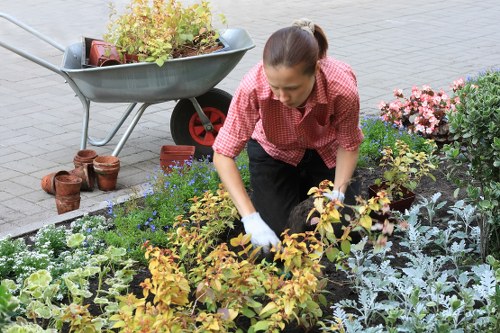 Our relationships with community groups also support volunteering, training and reuse events. These partnerships feed directly into our sustainable gardening initiatives: rescued materials become resources for communal wildlife gardens, school projects and allotment improvements, reinforcing a circular approach to garden resources.
To make the eco-friendly waste disposal area work at street level we provide clear signage and separation at collection points, plus seasonal campaigns to reduce contamination in recycling streams. Clear labelling helps residents and gardeners sort compostable material from plastics, glass and mixed recycling—following borough separation rules designed to keep organic streams clean and high-quality.
We also promote on-site composting for community gardens to cut transport emissions and return nutrients to soil. Where on-site composting isn’t practical, our consolidated collections ensure green waste moves quickly to industrial composting facilities rather than landfill, improving the carbon balance of garden waste management.
 Our sustainable rubbish gardening area model includes targeted support for apartment blocks and dense housing where communal green spaces often lack access to garden waste services. Through secure communal bins, scheduled low-carbon van collections and clear separation systems we make it straightforward for urban gardeners to do the right thing.
 Long-term success depends on measurable goals and community ownership. We publish annual progress against the recycling percentage target and adjust routes and partnerships to close gaps. By investing in electric vans, optimised transfer routing, charity partnerships and community reuse hubs, Gardeners Greenwich turns a simple garden tidy-up into a lasting environmental gain.
In summary, our approach to recycling and sustainability balances practical waste solutions with broader climate goals: reduce, reuse, recycle in the context of the urban garden. We support neighbourhood hubs, local transfer stations, and charity partners while driving a low-carbon fleet and ambitious recycling targets to make every green space part of the borough’s circular economy.
Join the movement by adopting best practice in green waste separation and supporting local reuse channels — because a sustainable rubbish gardening area in Greenwich is not just possible, it’s already growing.

